
Open-Technology Research Tool

Experimental Research Framework
Synch.Live v1.0 is a novel, open-technology, experimental paradigm for research on human collective behavior. The system tracks player positions, computes an emergence value in real time, and sends information to the hats. The hat lights are programmed to become less random as the group becomes more emergent and finally, to flash synchronously if the group can figure out how to move like a flock. Our system is the first to demonstrate that people can aggregate in flock-like behavior, without a leader.

Measuring Emergence
Synch.Live uses an algorithm developed by scientific advisors’ Fernando Rosas, Pedro Mediano, and Daniel Bor, with colleagues, to calculate the emergence value. The algorithm analyzes specific macro and micro properties of the system and then calculates how well they predict the movement of the group. If the macro is more predictive, it means the group is moving "as one" in a way that cannot be explained by the movement of individual players. That is, individuals are not just moving independently, but in a way that shows cooperation, mutual adjustment, and collective behavior.
The Data
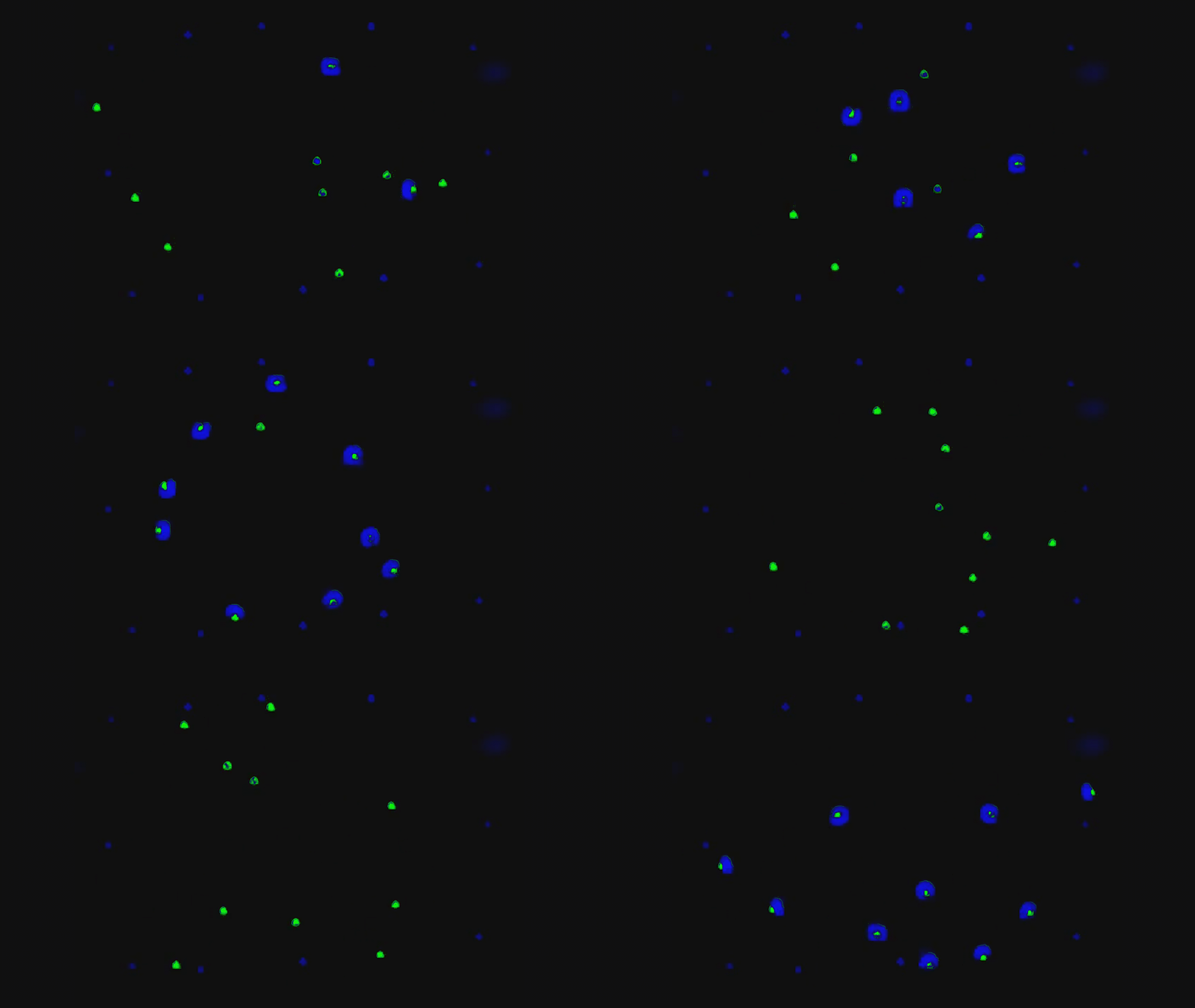
The Synch.Live system collects anonymized tracking data for artistic, social and scientific benefit. The data has much to teach researchers about how human groups cooperate, solve conflicts and build teams. It is also beautiful: a gestural, abstract map of human activity.
Active Research

Higher social connectedness
Scientists found that participants in successful groups experienced significantly higher social connectedness, providing early evidence that Synch.Live could be used to foster social cohesion. Additionally, participants with greater awareness of group strategies were more likely to succeed, linking individual agency to collective outcomes.

What makes something beautiful?
Although fundamental to human experience, the psychological underpinnings of the perception of beauty are still poorly understood. In a series of large online experiments, we asked participants to rate small videos of moving dots extracted from Synch.Live data. Findings revealed that more beautiful movement patterns are both more patterned and more emergent, suggesting that these are key factors that make up our experience of beauty. Paper forthcoming
What can brain signals teach us about collective experience?
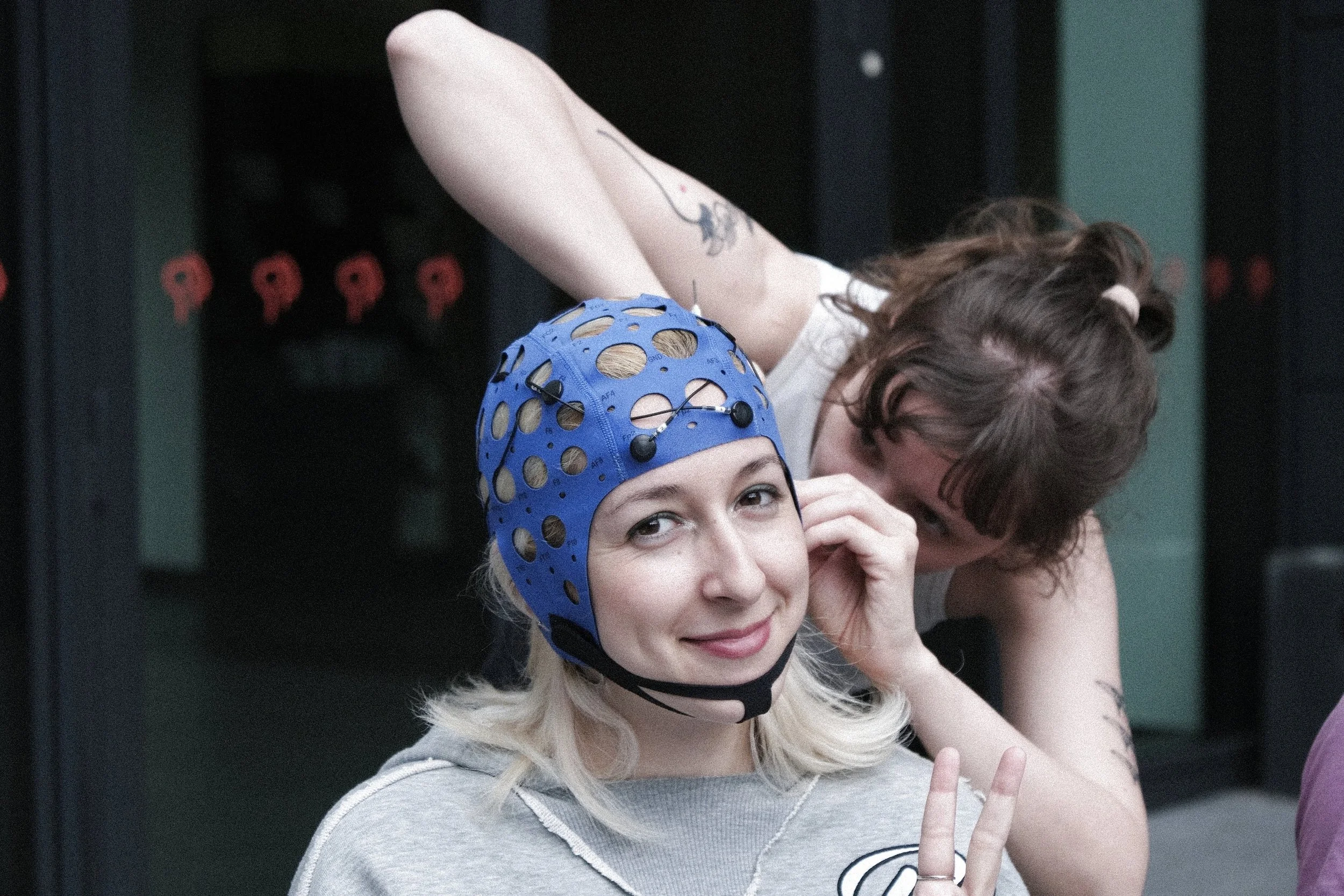
Scientists collected neural data (EEGs) during gameplay alongside psychometric data to understand how mathematical notions of emergence correspond to brain activity, potentially revealing the neural substrates of collective experience.